


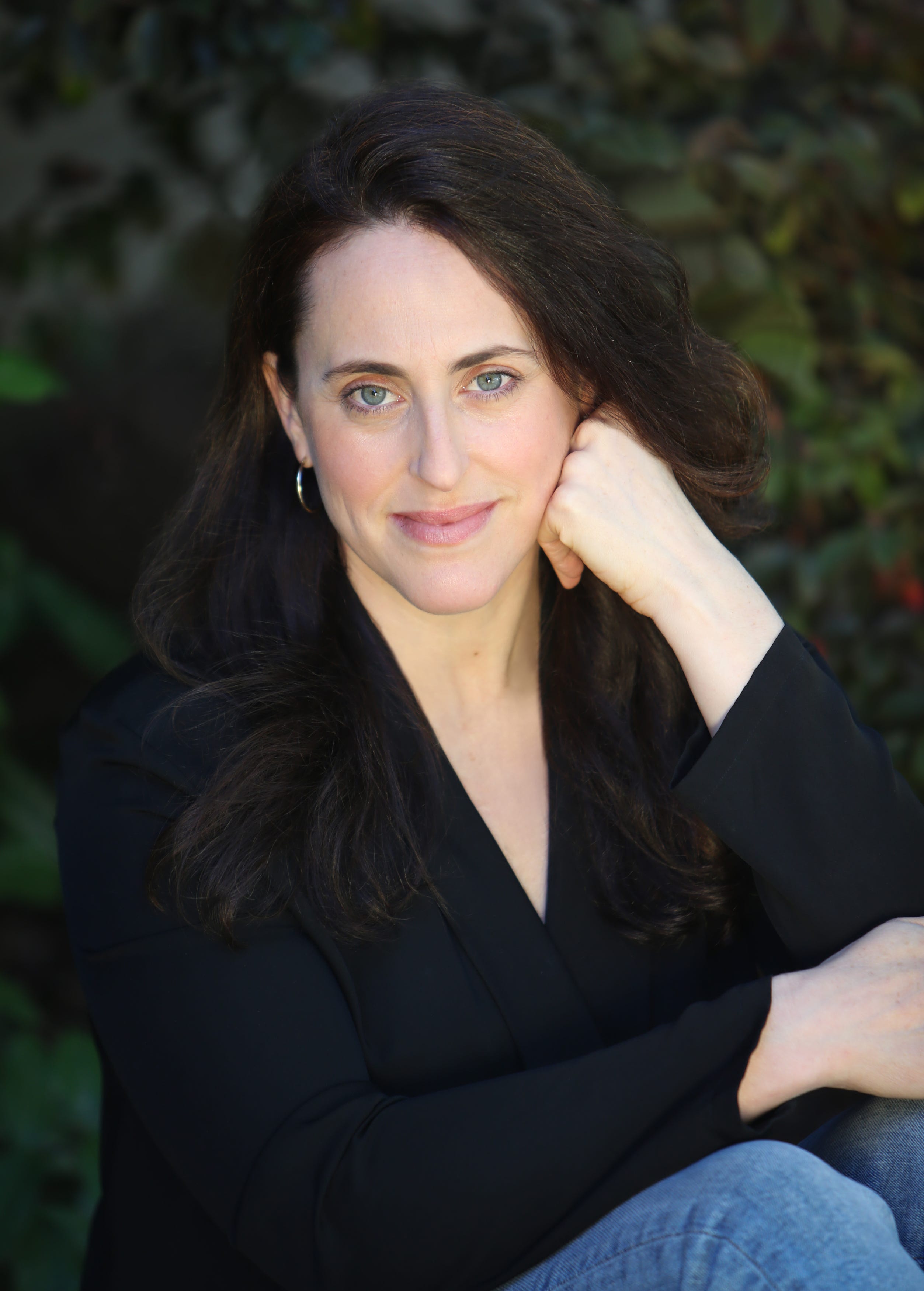
Elissa Strauss has a dream dinner party. At one end of the table sits a man who just hiked Everest. At the other, a woman caring for a parent with dementia. Everyone listens to both stories with equal fascination.
I’ve been to that dinner party, just not Elissa’s version. For years I sat at the mountain end of the table. When I was married, my husband was a mountain guide, a great storyteller with a booming laugh who was always returning from expeditions around the world. In that world, I learned that every climb depends on someone holding the rope, someone keeping the base camp tent upright in the wind and the stove lit.

Since then I’ve sat at the other end, running base camp for my mum and my uncle, and I’ve wondered who holds the rope for me. I wanted to know what it would take to give both ends equal airtime, so I sent Elissa eleven rather long questions. I’m grateful for the care she put into her answers.
Here in the Pink Zones, we talk about what helps women thrive in midlife and beyond. And one of the things that gets in the way of flourishing is what I call the longevity load: the caregiving, responsibility and invisible labour that arrive just as a woman’s own body and life are being renegotiated.

Elissa has spent more than fifteen years writing about parenting and caregiving as cultural and political subjects, for The Atlantic, The New York Times and CNN, among others. Her 2024 book, When You Care: The Unexpected Magic of Caring for Others, makes the case that dependency, rightly understood, isn’t a failure state. Her Substack is Made With Care. We connected on Substack, and I spoke with her for her CNN piece on Dolly Parton and caregiving.

Dolly Parton wrote the anthem for the movie 9 to 5. She also knew that caregiving is the work that doesn’t follow that schedule. Living inside the longevity load, I was hyperaware of what caregiving was costing me. It took me much longer to see the returns. Elissa’s book makes the case for what care gives back. Under the right conditions, it does, and those conditions are what the Pink Zones are seeking to map out.
My questions are in bold. Elissa’s answers follow exactly as she wrote them.
Your book makes a countercultural argument: caregiving is not only a burden or obligation; it can also be meaningful, transformative, and even life-giving for the person doing it. What made you want to make that case, and what did you feel was missing from the cultural conversation about care?
ELISSA: I think we speak about care in such binary ways. It is either the fairy tale or the nightmare, something that ruins us, or something that we perform seamlessly because we are women and always have that extra ounce to give. Both of these perspectives ultimately diminish care, turning it into something small, a footnote to human experience instead of the major plot point caring for a loved one really is.
This book is my gift to parents and caregivers, telling them, they are the main characters, their stories are important, and the way care challenges them and shapes them can be profound. It is about time the world recognizes how profound and mighty a task care really is, and give respect and support to those who do it.
My dream: there is a dinner party and on one end of the table is some guy who just hiked Mt. Everest, and on the other end there is a new dad, or a woman caring for a parent with dementia. And the group and the dinner treats ALL of these life stories as equally fascinating, and everyone is a hero in their own right.
One of the ideas I found most compelling in When You Care is your challenge to our cultural obsession with independence. Why do you think we place such a high value on self-sufficiency, and what does caregiving reveal about the limits of that ideal?
ELISSA: I trace it back to three layers. The first: patriarchy. Who historically did more caregiving? Women. Therefore, the logic of patriarchy tells us, it is not interesting. The second: capitalism. Ultimately, capitalism prioritizes efficiency and productivity, and a lot of caregiving resists such ways of thinking. To boot -- parenting and caregiving wasn’t seen as productive in classic economic measures like the GDP. Alas, we value it economically as nothing…and that spills over into our culture.
And last but not least: Care reminds us that we are weak and vulnerable, that we need and bleed, that none of us are invincible, that we will die. These aren’t things our culture likes to acknowledge. In fact, we are moving in the opposite direction, with the wealthiest among us seeking out immortality.
…care reminds us that we are weak and vulnerable, that we need and bleed, that none of us are invincible, that we will die.
There’s an important feminist tension in your work. Feminism has spent decades pushing back against the expectation that women should naturally be responsible for everyone else’s care. And yet your book asks us not to dismiss caregiving itself. How do you hold those two truths at once?
ELISSA: I could talk forever about this, but simply put. Feminism fought for women to enter the world of men’s work, where money and public power lie. This is a good thing. But it kinda left behind figuring out a way to raise the value, prestige, and appeal of what was traditionally women’s work: caregiving. I want both men and women to have an opportunity to experience the blessings and burdens of both paid work and care. We are still getting there….
How do we honour the meaning and value of care without romanticizing depletion? Is the problem caregiving itself, or the conditions under which so much caregiving is done?
ELISSA: I want to start by saying THIS is the work ahead. We have to acknowledge the fullness and might of care in all directions. And, IMMEDIATELY, we have to do what we can to offset the way care depletes people mind, body and soul through policy and culture change.
Two things: often it is hard to separate the caregiving from the fact that our loved one has a horrible medical condition. We can hate the cancer. In fact, we do hate the cancer! As well as that medical system that makes things nearly impossible. But we also value that we get to care for this person with cancer.
Also, there are care situations that are just hard, ugly, impossible. Sometimes care doesn’t come along with meaning and growth, only pain.
But all this said, when you look at the data, most people find themselves in the messy middle and want a way to talk about it all. They resent the conditions they care in, but also value the care they give and find the experience powerful AF and want to talk about it!
A large Women’s Health Initiative study I wrote about found that women who reported caregiving at two points in time had a 9% lower risk of dying from any cause than non-caregivers. It complicates the usual story that caregiving is simply harmful. What do you make of findings like this, and what might caregiving give back when it’s sustainable and supported?
ELISSA: Yes! I wrote about a bunch of these studies in my book with similar surprising results. Again, there are many people for whom this isn’t the case and I hope these studies don’t make them feel like “if I was only more generous, or had a better attitude, I wouldn’t be so knocked down by care.”
That said, care is physically and cognitively demanding, and can keep you “on your feet” literally and metaphorically. It brings you purpose and meaning, and a surge of those feel good hormones we call a “helpers high.” Humans are wired to be pro-social and care is pro-social. The catch? We can’t be pro-social totally on our own. When you give care, you need care. (This is why I give all my paid Substack subscribers swag that says TAKE CARE/ GIVE CARE. Because that is a forever truth for humanity.)
It seems like the useful question isn’t whether caregiving is “good” or “bad” for us, but under what conditions it becomes sustaining rather than depleting? What does your research suggest makes the difference?
ELISSA: To build off of what I was just saying…when you care for another you are no longer independent yourself. You can’t take care of all your needs, so you need someone to care for you. This might be doing things on your behalf, or taking over care so you can have the time to do those things for yourself. You simply can’t care well for anyone, let alone yourself, without support.
There are some low hanging fruits, things like universal paid leave, childcare, respite care, and other government programs that make it so people don’t have to choose between caregiving and their sanity/ ability to pay the mortgage. We also need a culture change that makes caregiver dependency normal, and has more of us showing up for one another.
Many women enter their heaviest caregiving years in midlife, just as their own health, hormones, careers, relationships, and identities may also be changing. We tell women to sleep more, strength train, maintain friendships, protect their bones and brains — all good advice — but caregiving can consume the very resources those things require. What do you think we miss when we treat healthy aging as an individual responsibility rather than something shaped by the conditions around a woman?
ELISSA: Hi! It’s me! Checklist life, always failing, always behind. My dream is that all women think about everything they are doing in the name of perfection or optimization and replace those words with “connection.” What if that was the goal? Connection with our bodies, with others, our selves? I don’t know a woman alive who, in her attempt to age well, isn’t exhausting herself. It’s time to shift gears.
My dream is that all women think about everything they are doing in the name of perfection or optimization and replace those words with “connection.”
Your book also asks us to rethink dependency — not only the dependency of the person being cared for, but our own eventual dependency. What has writing about care taught you about aging, vulnerability, and the fear of needing other people?
ELISSA: I am so grateful for this one particular outcome: I am no longer surprised when someone needs care. It no longer feels like an aberration of my day when a child has to stay home sick, or I have to coordinate doctors’ appointments for a parent, and so on. I’m not saying I’m all the way there and handle it all with calm and grace. But I have mostly turned off the spigot of rage that would erupt when these “interruptions” came my way. Because they aren’t interruptions really. They are the natural course of things. But the world conspired to trick me and convince me otherwise.
After years of being the solo person at the helm for elders (my mum and my uncle) with dementia, and as a childless person, I sometimes wonder — who will be my Heidi? What do you think our culture needs to understand about interdependence before more of us reach the stage of life when we ourselves need care?
ELISSA: I think we need to understand, deep in our guts, that dependency is as expected as independence. That most of us will spend most of our lives on one side of a dependency relationship, whether we are being depended on, or depending on someone else.
There isn’t a one-size-fits-all solution, so much as a need for awareness and to plan our lives accordingly and advocate for more systemic support.
If you could change one structural thing about how caregiving is treated in our society — not an individual practice, but a systemic condition — what would you change first?
ELISSA: In the United States, I would pass universal paid leave. Globally, I would change the medical system so caregivers are integrated from day one, and cared for as well alongside the people they care for.
You’ve been thinking and writing about care for over fifteen years. What has changed most in your own thinking? Is there something you once believed that you now see differently, or something you discovered through the book that genuinely surprised you?
ELISSA: I used to believe that we need policy change first, and the culture change will follow. These days I am more convinced that the culture change has to come first. We need people to be care-aware before we can build systems that truly support us all.
Also, more personally: the care I do for a parent with dementia is hard, tricky, and trying. I do find it meaningful, but also holy crap. So I want to make sure that I make space for the whole messy enchilada in the way I talk about care, and leave room for all the feelings.

What I’m taking from this.
Two things Elissa said will stay with me.
The first: “You simply can’t care well for anyone, let alone yourself, without support.” In Pink Zones terms, that’s systemic support, the soil everything else grows in. The second is her conviction that culture has to change first, that we need to be care-aware before the systems can follow. That’s my thinking too.
She also dreams that women replace perfection and optimization with “connection.” I so love that. In 25 years of working one-on-one with women, the sentence I hear most is “I want to fix my “….” A body isn’t a project. It’s a relationship, and relationships run on listening.
Caregiving taught me the other side of that. For long stretches I couldn’t listen to my own body, because something more urgent was in front of me. I overrode my hunger, my sleep, my impatience. Back in a hotel room, a friend’s spare room or my own home, sustaining myself meant doing something other than numbing out, which was tempting: a hot bath, stretching on the floor, a call with a friend with a clearer mind who wasn’t living inside dementia with me.
So who will be my Heidi when the time comes? Elissa is honest that there isn’t a one-size-fits-all answer. For now I’m still the one at the helm, but I’m building a mycelial network of peers to accompany me, and as I map out the Pink Zones I’m learning so much from the incredible guides I meet a few steps ahead of me. It’s a big life assignment, and I’m grateful to have study buddies.
Elissa’s swag is the cheat sheet, in four words: TAKE CARE / GIVE CARE.

Follow Elissa Strauss
If you’d like to keep thinking about care with Elissa, there’s more where it came from. Elissa writes about care and caregiving in her Substack, Made With Care, and you can find her on Instagram at @elissaavery. Her book, When You Care: The Unexpected Magic of Caring for Others, is published by Simon & Schuster.
More at elissastrauss.com.

If this conversation got you thinking, this continues beyond the page inside The Pink Zones Podcast Club. Think of it as a book club- only with podcasts.
If you’re looking for a place to gather in community, you’re welcome to join us.
Our last one of 2026 is Thursday, November 19th. You can sign up here.


If you’re enjoying being part of my early mapping days here— (and, if you’re reading this, you are already), please leave a comment or share this post, especially with someone who’s deep in caregiving right now.
Which of Elissa’s answers are you still thinking about?
And if you’re reading this in email, please always feel free to hit reply and send me a private message. I’d love to hear from you.

Thank you so much for sharing Elissa's work. I was unfamiliar with her book and her Substack before, but it is most certainly now on my radar. As a former caregiver to my mother and husband, I absolutely agree that there is nuance to the impact of caregiving. Where it created significant challenges and an inversion of parent-child with my mother, it deepened the trust and respect between my husband and I. One of the reasons we are championing this new anthology, The Whole Trust of Caregiving, is to invite stories of caregiving that are messy, and that includes good messy. When we are allowed to both see and share the whole truth of our experience as caregivers and as those being cared for, we normalize what it means to ask for, need, and give help, and that is crucial to build and sustain community.