


It might surprise you to know I have a few things in common with Dolly Parton. Not the rhinestones. The caregiving — and what it can do to the person doing it.
Dolly cared for her beloved husband, Carl for years and, by her own account, stopped taking care of herself in some ways. This week, Elissa Strauss, author of When You Care: The Unexpected Magic of Caring for Others, wrote about that for CNN. We’re connected on Substack, which is how I ended up talking with her for the piece. I’m in it not as an expert, but as a daughter of a mother with Alzheimer’s, with quite a lot of lived experience of what happens when caring for someone else takes up nearly all the available space.
Anyone who has parented, cared for a sick partner, or looked after an aging parent knows that sometimes you do put yourself to the side. That isn’t necessarily a failure of “self-care.” Sometimes it’s a necessary part of caring for another human being. And for mothers especially, that reflex can become deeply embedded. I saw it in my own mum, in the way she cared for my grandmother with Alzheimer’s.
The trouble is when a period of putting yourself second stretches into years. You know you’re depleted. But the needs keep coming, and there is never quite a clear moment when it becomes your singular turn again.
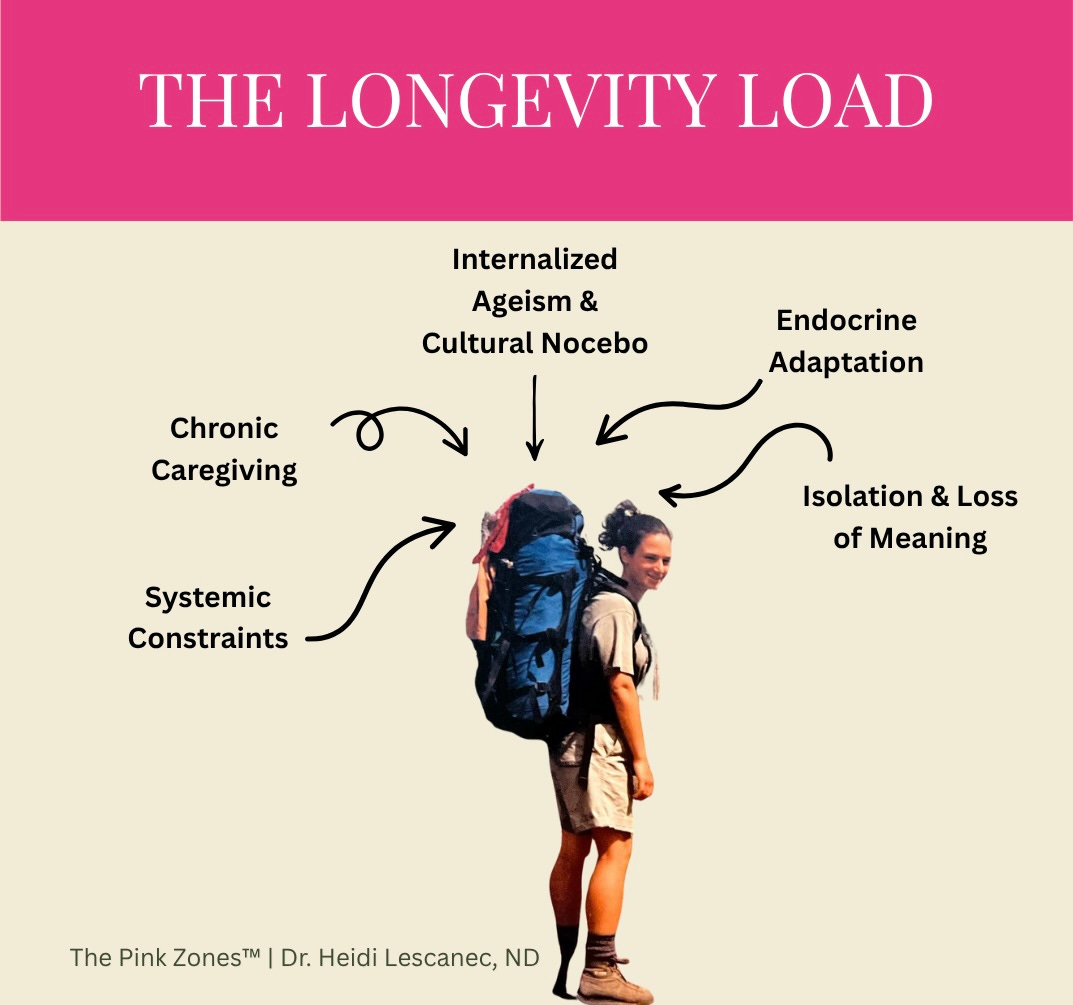
This is part of what I mean by the Longevity Load I have written about at length.
It’s the hidden, cumulative burden many women carry into midlife and later life: caregiving, invisible labour, chronic responsibility, emotional vigilance, financial strain, interrupted sleep, and years of being the person who keeps everything moving.
It matters because we talk about healthy aging as though it happens in a vacuum.
We tell women to strength train. Sleep more. Eat well. Manage stress. Keep up with screenings. Maintain friendships. Protect their hearts, brains and bones. All of that matters. But those recommendations require resources: time, attention, energy, money and support.
Caregiving can consume the very resources healthy aging depends on.
What feels important in this moment is that Dolly’s story made this particular part of the load visible on a very large stage.

I have probably waxed on about the Longevity Load more than enough by now to qualify as someone carrying the concept around in its own overstuffed backpack. My fabulous book architect/editor Kathy, has gently pointed out that I’ve proven it over and over again in my in my chapters. Time, perhaps, to set it down for a spell.
Maybe it’s because I’ve gone on so many backpacking trips that the metaphor still makes immediate sense to me. You can walk a long way carrying a great deal, but eventually the weight changes the experience of the journey. You have to liberate or your body will suffer. Walking the Camino de Santiago in Spain in 2007 it took me three days of strain before I realized I had to reduce and mail back 10 lbs of “extras” to my friend’s place in Biarritz!
I’ll confess I find weighted vests funny. Women in midlife are told to add load for their bones and muscles, and part of me thinks: are you kidding? I already carry a backpack with most of my life in it — laptop, water bottle, lunch, workout gear, snacks, the rain jacket just in case.
The point is, I don’t need to keep proving the load exists. I’ve written about this terrain from the inside before. In I Care, and I Have Limits, I wrote about the yes/and of midlife care: what it means to care deeply and still have limits, and what the research tells us about the cost and benefit of caring. In He Forgot She Was Gone, I wrote about my uncle with dementia, who kept forgetting that his wife had died and called me morning after morning in panic, convinced my aunt was missing. I’ll leave those stories there rather than retell them here.
What interests me more now is what lightens it — and what creates enough capacity for women not merely to endure midlife, but to have room for pleasure, connection, creativity, meaning, and whatever wants to come next.
And this is where Dolly points us toward another Pink Zones pillar altogether: Creative Vitality. She embodied that in spades. So do many of the remarkable women I encounter here on Substack, writing, making, beginning again, changing direction, and following the threads that pull them toward more life.
We recently lost Yayoi Kusama at 97, another woman I’ve written about in my forthcoming book. She kept painting into the final weeks of her life. For Kusama, creativity was not decoration around the edges of life; it was the thread itself — something she followed through pain, obscurity, and eventually extraordinary recognition. Creativity sustained her long before it made her visible.
These were two very different Pink Zones Icons. Dolly made creative vitality look exuberant. Kusama made it look essential.
Creativity in midlife and beyond is not simply a pleasant extra, but one of the things that gives something back — restoring identity, aliveness, meaning, and momentum when so much else is asking from us and changing around us.
That is the conversation I will be writing about next- it’s my last and most juicy pillar of the Pink Zones.
Rest easy, Dolly. ✨ In that comfortable cotton, wrapped in love and so much care. You set a lot in motion, including this important conversation.
Elissa’s excellent CNN piece is here. And if caregiving is part of your life, her Substack Made With Care and her book When You Care are both worth knowing.

If this article resonates, this is the kind of conversation that lives beyond the page inside The Pink Zones Podcast Club. ….like a book club- only podcasts!
If you’re looking for a place to gather in community, you’re welcome to join us.
Our next one of 2026 is Sept 17! Sign up here!


If you’re enjoying being part of my beginning journey here— and, if you’re reading this, you are already a part of this adventure — I’d love for you to leave a comment or share this post.
And if you’re reading this in email, please always feel free to hit reply and send me a private message that way. I’d love to hear from you!
My concern is always with the caretakers of the world more so than with those they take care of. I have seen their tendency to put the needs of others before their own needs. It has to be a difficult and delicate balance. Can’t wait to read your book, Heidi!
Yes. For many years I did not care for myself. I see the results now.